
Introduction
Artificial Intelligence (AI) is no longer just a futuristic concept seen in science-fiction movies. Today, AI used by humans has become a part of everyday life. From voice assistants and personalized recommendations to online shopping and digital marketing, artificial intelligence is helping people work faster, make better decisions, and automate repetitive tasks.
Businesses, students, professionals, and ordinary users are increasingly using AI tools for different purposes. The technology is changing the way people learn, communicate, work, shop, and entertain themselves.
But how exactly is AI used by humans? Let’s explore some of the most common and useful applications.
What Is Artificial Intelligence?
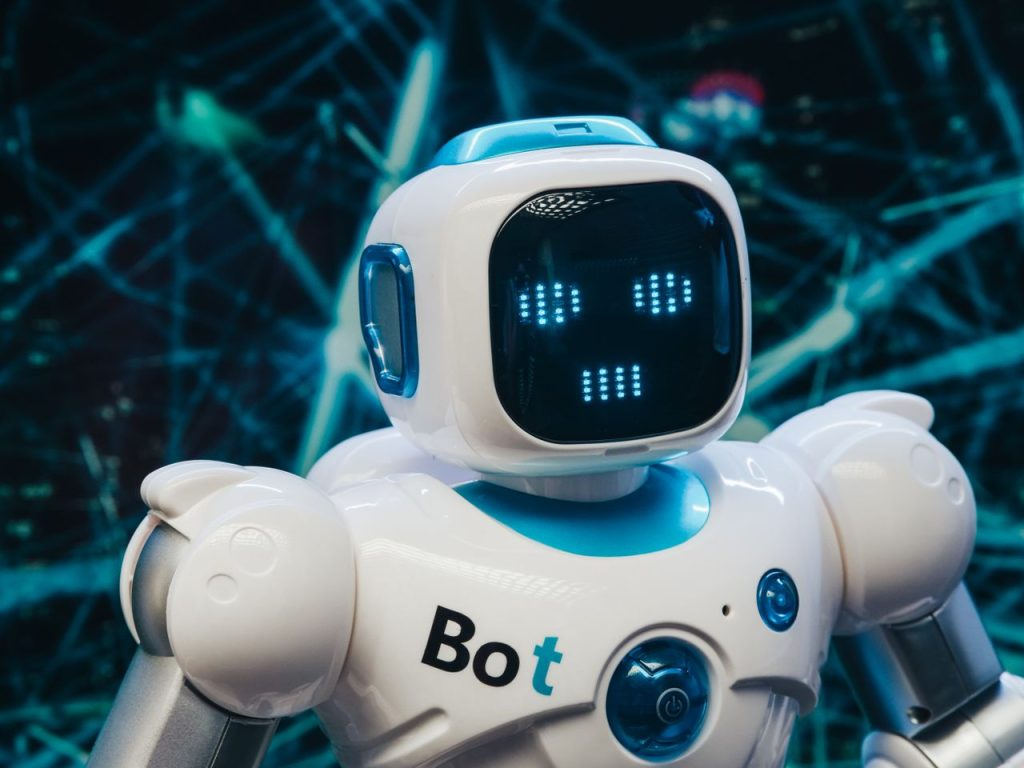
Artificial Intelligence is a technology that allows computers and machines to perform tasks that normally require human intelligence.
tasks can include understanding language, recognizing images, analyzing information, making predictions, and generating content.
AI systems learn from large amounts of data and use patterns to produce useful results. Unlike traditional software that simply follows fixed instructions, many modern AI systems can identify patterns and improve their performance through learning.
How Is AI Used by Humans?
There are many ways people use AI in their personal and professional lives. Some of the most important applications are discussed below.
1. AI in Education
Education is one of the areas where AI can provide significant support. Students can use AI-powered tools to understand difficult concepts, generate study ideas, summarize information, and practice questions.
Teachers can also use AI to create lesson plans, prepare quizzes, organize educational material, and analyze student performance.
However, AI should be used as a learning assistant rather than a replacement for genuine learning. Students should understand and verify the information provided by AI.
Image suggestion: Student using an AI learning assistant on a laptop.
ALT Text: AI used by humans in education

2. AI in Healthcare
Healthcare professionals are also using artificial intelligence to support diagnosis, medical research, patient management, and administrative tasks.
AI can analyze large amounts of medical data and help professionals identify patterns that may be difficult to notice manually. It can also assist with appointment scheduling, documentation, and other repetitive activities.
AI does not replace doctors and medical professionals. Instead, it can act as a supporting technology that helps them work more efficiently.
Image suggestion: Doctor analyzing an AI-powered medical dashboard.
ALT Text: AI used by humans in healthcare
3. AI in Digital Marketing
Digital marketers are increasingly using AI for content ideas, keyword research, customer analysis, advertising, and personalization.
AI can analyze customer behavior and help marketers understand what type of content audiences are interested in. It can also assist with creating social media captions, email ideas, advertisements, and content outlines.
For marketers, AI can save time while allowing them to focus more on strategy, creativity, and understanding their audience.
Image suggestion: Digital marketer working with an AI analytics dashboard.
ALT Text: AI used by humans in digital marketing
4. AI in Business
Businesses use AI to automate repetitive processes and analyze data. Customer service chatbots, sales forecasting, fraud detection, recommendation systems, and business analytics are some common examples.
AI can help companies understand customers and identify trends in their markets. It can also reduce the amount of manual work employees need to perform.
The goal is not necessarily to replace humans but to allow employees to spend more time on tasks requiring creativity, communication, and decision-making.
5. AI in Entertainment
AI has also changed the entertainment industry. Streaming platforms use AI algorithms to recommend movies, music, and shows based on users’ interests and previous activity.
AI is also being used in video editing, animation, gaming, music production, and content creation.
For users, this means more personalized entertainment experiences. For creators, AI can provide tools that make the creative process faster and more accessible.
6. AI in Everyday Life
Many people interact with AI without even realizing it. Smartphone face recognition, navigation applications, spam filters, online shopping recommendations, voice assistants, and smart home devices can all involve artificial intelligence.
For example, when a navigation app predicts traffic and suggests a faster route, AI and data analysis help provide that recommendation.
This shows how AI used by humans is becoming integrated into ordinary activities.
Benefits of AI for Humans
AI offers several potential benefits when it is used responsibly:
- Saves time: AI can automate repetitive tasks.
- Improves productivity: People can complete certain tasks faster.
- Analyzes large amounts of data: AI can identify patterns quickly.
- Provides personalization: Services can be customized according to user preferences.
- Supports decision-making: AI can provide useful insights and predictions.
- Encourages innovation: New AI tools can help people experiment with new ideas.
Challenges of Using AI
Despite its advantages, AI also has limitations. AI-generated information can sometimes be incorrect, biased, or incomplete. Privacy, data security, misinformation, and overdependence on technology are also important concerns.
Humans should therefore remain responsible for important decisions and verify AI-generated information before using it.
The best approach is to combine human judgment with AI capabilities. AI can process information quickly, but human creativity, experience, empathy, and critical thinking remain extremely important.
The Future of AI and Humans
The relationship between humans and artificial intelligence is likely to become even stronger in the coming years. AI tools will continue to become more accessible and may become part of more workplaces, educational systems, businesses, and everyday devices.
The future is not simply about humans competing with AI. Instead, people who know how to use AI effectively may have an advantage because they can combine technology with human skills.
Learning how to use AI responsibly can therefore become an important skill for students, professionals, entrepreneurs, and businesses.
Conclusion
AI used by humans is already changing the way people live and work. From education and healthcare to digital marketing, business, entertainment, and everyday activities, artificial intelligence has many practical applications.
AI can save time, improve productivity, analyze information, and support decision-making. At the same time, users need to understand its limitations and use it responsibly.
The future of artificial intelligence will depend not only on how powerful the technology becomes but also on how effectively humans use it. When combined with human creativity, judgment, and responsibility, AI can become a powerful tool for solving problems and creating new opportunities.
for more such content-https://whalelab.in
another blog for gym supplements https://whalelab.in/wp-admin/post.php?post=16&action=edit
for More Such Content Do visit This website ! – puneethttps://whalelab.in